Ingredients
The 5 Oils Every Soap Maker Should Know
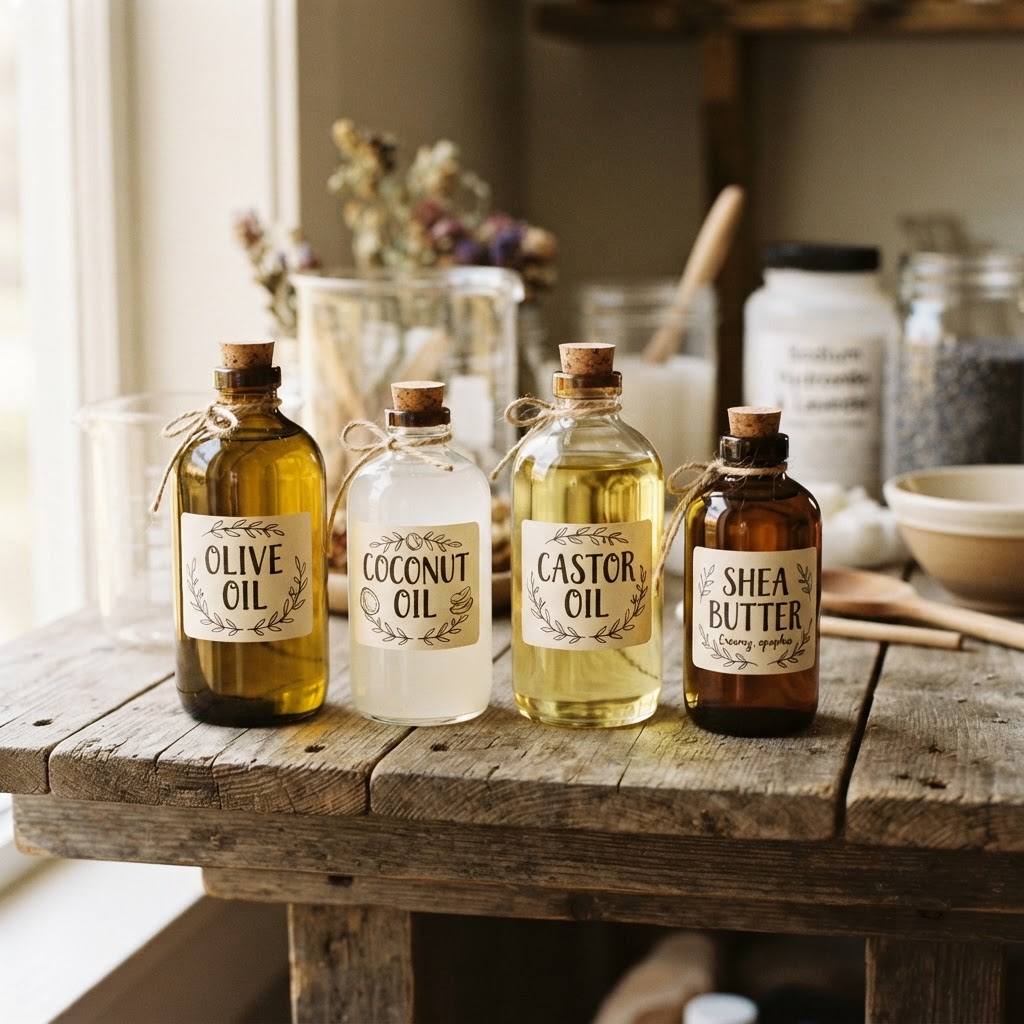
Every soap recipe is built from a handful of oils. Understand these five, and you can formulate anything — without blindly copying recipes.
If you're tired of following soap recipes without understanding why they work, this is where you start. Every oil in soap making does a specific job. Once you know what those jobs are, you can stop copying and start creating.
Here are the five oils that form the backbone of almost every cold-process soap recipe.
1. Olive Oil — The Gentle Base
Olive oil is the foundation of most soap recipes, and for good reason. It produces a mild, conditioning bar that's gentle enough for sensitive skin and babies.
What it does:
- Creates a soft, gentle lather (not very bubbly, but creamy)
- Produces a hard, long-lasting bar after cure
- Very mild on skin — high in oleic acid
What to know:
- Takes a long time to trace (good for beginners — gives you time to work)
- Needs a longer cure (6+ weeks) to reach full hardness
- Pomace olive oil traces faster but can be harder to find
Typical usage: 40–70% of total oils
If you only use one oil in your soap, make it olive. A 100% olive oil soap (called a Castile) is one of the gentlest bars you can make.
2. Coconut Oil — The Lather Builder
If your soap doesn't lather well, you need coconut oil. It's the primary lather-builder in most recipes.
What it does:
- Produces big, fluffy, cleansing bubbles
- Contributes to bar hardness
- Adds cleansing power (strips oil from skin)
What to know:
- Too much coconut oil dries skin. At high percentages (above 30%), coconut oil can be stripping. That's why we superfat at 5–8%.
- Use the 76° melting point version (the most common). Fractionated and 92° versions behave differently.
- 20–30% is the sweet spot for most recipes
Typical usage: 20–30% of total oils
3. Palm Oil — The Hardness Contributor
Palm oil creates a hard, stable bar with a creamy lather. It's the oil that gives soap its structure.
What it does:
- Hardens the bar (like coconut, but without the drying)
- Creates a stable, creamy lather
- Helps soap last longer in the shower
What to know:
- Ethical sourcing matters. Conventional palm oil is linked to deforestation. If you use it, buy RSPO-certified sustainable palm — or skip it entirely (many makers do).
- It's not essential — you can substitute with tallow, lard, or increased coconut/butter percentages.
- Some makers avoid palm entirely for ethical and labeling reasons.
Typical usage: 20–40% (or 0% if you're going palm-free)
4. Castor Oil — The Lather Booster
This is the secret ingredient most beginners don't know about. A small amount of castor oil transforms your lather from adequate to luxurious.
What it does:
- Creates dense, stable, creamy lather (the kind that sticks around)
- Boosts the bubble structure of other oils
- Acts as a humectant (draws moisture to skin)
What to know:
- You don't need much — 3–8% is standard
- Too much makes the bar soft and sticky
- It's the difference between a bar that lathers okay and a bar that lathers beautifully
Typical usage: 3–8% of total oils
5. Shea Butter — The Luxury Conditioner
Shea butter isn't a structural oil — it's a luxury addition that takes your soap from functional to nourishing.
What it does:
- Adds creamy, conditioning lather
- Contributes unsaponified oils (superfat) that moisturize skin
- Creates a silky, lotion-like feel
What to know:
- Can accelerate trace (work quickly if using more than 10%)
- Best used at 5–15% of total oils
- The difference is felt more than seen — your skin will notice
Typical usage: 5–15% of total oils
Putting it all together
A balanced beginner recipe uses all five:
| Oil | Percentage | Role | |---|---|---| | Olive oil | 50% | Gentle base + conditioning | | Coconut oil | 25% | Lather + cleansing | | Palm oil (or substitute) | 15% | Hardness + stability | | Castor oil | 5% | Lather boost | | Shea butter | 5% | Luxury conditioning |
Total: 100%
This gives you a bar that's gentle (olive), lathers well (coconut + castor), is hard and long-lasting (palm), and feels luxurious (shea). It's the formula most beginner recipes are built on — and now you know why.
The next step
Once you understand these five oils, you can start experimenting:
- Swap palm for tallow or lard for a traditional bar
- Increase shea for a more conditioning bar (reduce olive)
- Add sweet almond or apricot kernel for extra conditioning
- Try a 100% olive Castile for the gentlest bar possible
The goal isn't to memorize recipes. The goal is to understand ingredients — so when you read a recipe, you know what each oil is doing and whether you can swap it.
Start with the five. Build from there.
♡
Keep learning with our e-books
Step-by-step guides for makers — soap recipes, body butter formulas, and more.
Browse E-Books & LearningJoin the Tribe ♡
Get new tutorials, recipes, and maker business tips straight to your inbox.
