Candle Making
Why Wood Wicks Make Better Candles (And How to Use Them)
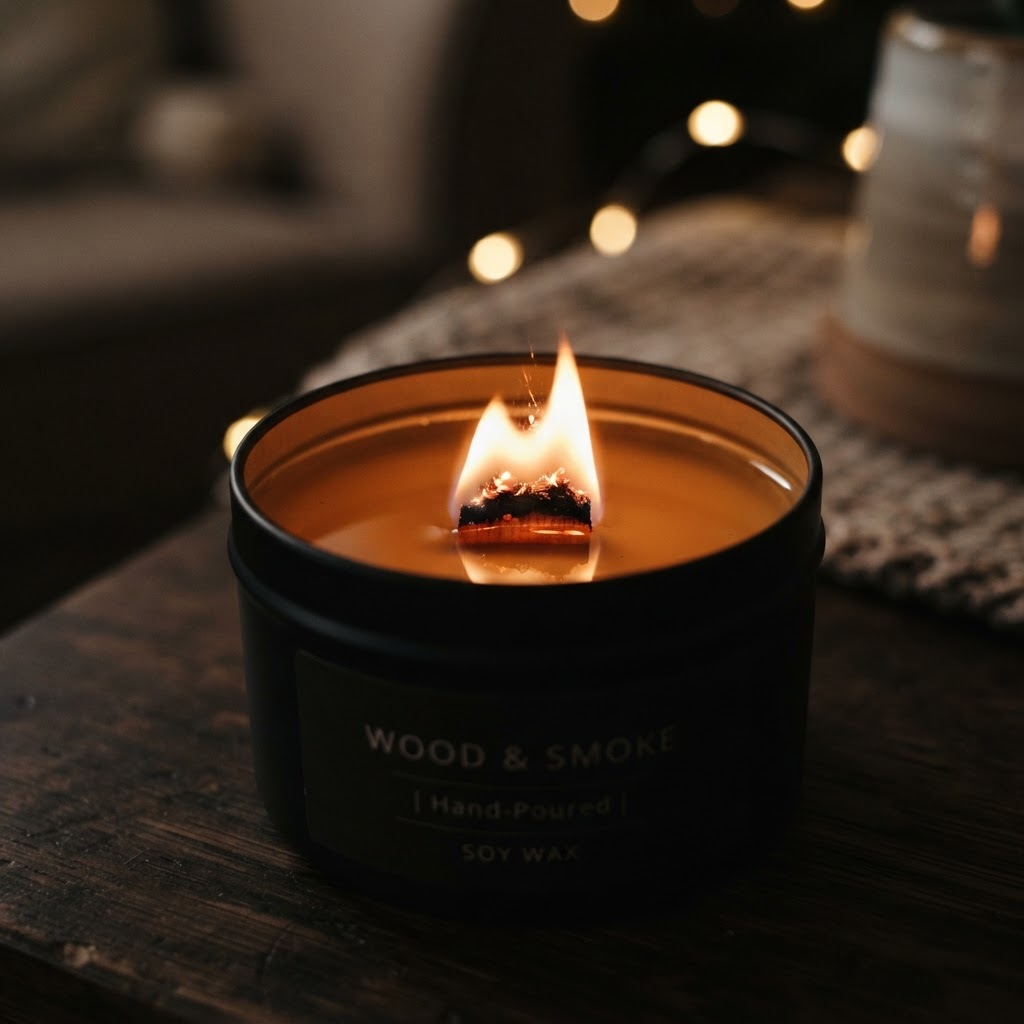
Wood wicks aren't just aesthetic. They burn cleaner, crackle like a tiny fireplace, and create a more even melt pool. Here's why we'll never go back to cotton.
When we first started making candles, we used cotton wicks. Everyone does. They're cheap, they're everywhere, and they work fine. But the first time we lit a wood wick candle, we knew we were never going back.
Here's why.
The crackle
This is the thing people notice first. A wood wick crackles. Softly, gently, like a tiny fireplace. It's not loud — it's ambient. The kind of sound that makes you look up from whatever you're doing and realize the room feels different.
You can't un-hear it. Once you've had a candle that crackles, a silent cotton wick feels like watching a movie with the sound off.
The burn is better
Wood wicks create a wider, more even melt pool than cotton wicks. This matters more than you'd think:
- No tunneling. Cotton wicks can mushroom and bend, causing uneven burning that wastes wax on the edges. Wood wicks burn straight and wide.
- Better scent throw. A wider melt pool means more wax is liquid at any given time, which means more fragrance is released into the room.
- Longer burn time. Wood wicks burn slower and at a lower temperature, so your candle lasts longer.
The clean burn
Cotton wicks can have a metallic core (usually zinc) to keep them upright. Wood wicks don't need one — they're rigid by nature. That means no metal burning in your candle, no sooting from a mushroomed wick, no weird smell when the candle burns low.
We use 100% natural wood wicks. No coatings, no treatments, just wood.
If you're burning a candle in your home, you're breathing what it puts off. Wood wicks put off less, and what they do put off is cleaner.
The one thing wood wicks need
Wood wicks aren't harder to use, but they do need one thing cotton wicks don't: a longer first burn.
When you first light a wood wick candle, the flame needs time to establish itself and melt the wax all the way to the edges. Give it at least 30 minutes on the first burn — ideally an hour. This sets the melt pool memory and prevents tunneling for the life of the candle.
If the wick goes out, don't panic. Just relight it and give it time. The wood needs to heat up and draw wax up through its grain. Once it's going, it's going.
How to trim
Wood wicks are actually easier to trim than cotton wicks. You don't need special scissors. Before each burn:
- Let the candle cool completely.
- Pinch off the charred part of the wick with your fingers (or use a wick trimmer).
- Leave about 1/4 inch of wick above the wax.
That's it. The charred wood comes off easily — it's basically ash at that point.
Why we chose them
We could use cotton wicks and save money. We don't, because we make candles we'd want to burn in our own home. And in our home, we want the crackle, the clean burn, and the wider melt pool.
Every candle we pour has a wood wick. It's not a feature. It's a standard.
If you've never burned one, light one tonight. Turn off the overheads. Listen for the crackle. That's the sound of a better candle.
♡
Keep learning with our e-books
Step-by-step guides for makers — soap recipes, body butter formulas, and more.
Browse E-Books & LearningJoin the Tribe ♡
Get new tutorials, recipes, and maker business tips straight to your inbox.
